
News
Centering What Matters Most
This featured guest piece is an excerpt of our September 2026 newsletter.
Dear Women and Girls of the Commonwealth,
It is an honor to begin this new program year as Chairwoman of the Massachusetts Commission on the Status of Women — a role I see as a shared responsibility to the women and girls we serve and to the commissioners and partners we lead alongside.
I grew up in Easthampton, began my career in Western Massachusetts, worked in and around Boston, and now lead a women’s fund on the SouthCoast. Those experiences have shown me how unevenly progress is still felt.
The Massachusetts experienced near Beacon Hill can look very different from the Massachusetts experienced in our Gateway Cities and rural communities. Intersectionality matters because gender is never experienced in isolation. Race, geography, income, disability, immigration status, caregiving, age, and identity all shape the barriers women encounter.
So does economic inequality. Who can afford child care? Who has flexibility at work? Who can get to the meeting, stay late, serve on a board, or volunteer for a commission? These questions shape who gets to lead. They are also why I want to work with our commissioners and partners to make public leadership more accessible, especially for women whose voices have too often been missing from decision-making spaces.
My generation came of age learning that progress is not guaranteed. Millennials watched September 11 reshape the world, entered the workforce during the Great Recession, lived through a pandemic that exposed deep inequities, and watched rights many of us assumed were settled become unsettled again.
Those experiences taught me that progress is not inevitable — and shaped the way I lead. Years ago, when I joined the Berkshire County Commission on the Status of Women in my early twenties, leadership often felt like getting into the room.
I understand the responsibility differently now.
Once you are in the room, you have to ask who still is not.
Whose experiences are shaping our priorities? Who has knowledge but not influence? Are we hearing women in Gateway Cities and rural communities as clearly as those closest to Beacon Hill? Are the people most affected by decisions helping shape them from the beginning?
That is where equity becomes real — not simply in who is invited to participate, but in who is trusted to shape priorities, make decisions, and lead.
Women are not a monolith. We differ by race, geography, generation, income, political philosophy, profession, identity, family structure, and lived experience. But difference does not have to mean distance.
I believe this moment requires more connection, not less.
Earlier this year, I wrote that women’s leadership is democratic infrastructure. I believe that even more deeply now. MCSW can connect Beacon Hill and our neighborhoods, policy and lived experience, research and community knowledge, and established leaders with emerging ones. We can also bring women- and girl-serving organizations together where our work intersects and use our collective voice more effectively.
That vision will take concrete form this year through Advocacy Day 2027, Commonwealth Heroines, GELI, and the ongoing work of our 11 regional commissions.
If you have ever considered serving, I hope you will apply.
And to those already serving: thank you.
Our state and regional commissioners bring deep knowledge of their communities, relationships, judgment, and lived experience to this work. That is not peripheral to MCSW. It is MCSW.
My job as Chairwoman is not to lead above that work, but alongside it.
I want women across the Commonwealth to see themselves reflected in what we hear, what we elevate, and what we work to change. I want lived experience to be treated as expertise. I want regional commissions to know they are essential to statewide work. I want women- and girl-serving organizations to see us as a convener, connector, and partner. And I want policymakers across the political spectrum to know they can look to MCSW for thoughtful, grounded insight into what women are actually experiencing.
This summer, I was proud to be elected to the Board of Directors of the National Association of Commissions for Women (NACW) alongside our Executive Director, Shaitia Spruell — another opportunity to learn from commissions across the country while sharing what we are building here.
I started this work in one of our regional commissions. Today, I have the privilege of serving as Chairwoman of the statewide Commission.
My responsibility now is not simply to make sure I have a voice in the room. It is to help build a bigger room — one where more women can enter, where they are not simply welcomed but heard, and where the people most affected by decisions have real influence over what happens next.
The progress we inherit is also ours to protect, deepen, and pass forward.
And I am proud to do that work alongside all of you.
With gratitude and solidarity,
Christine Monska
Chairwoman
Massachusetts Commission on the Status of Women
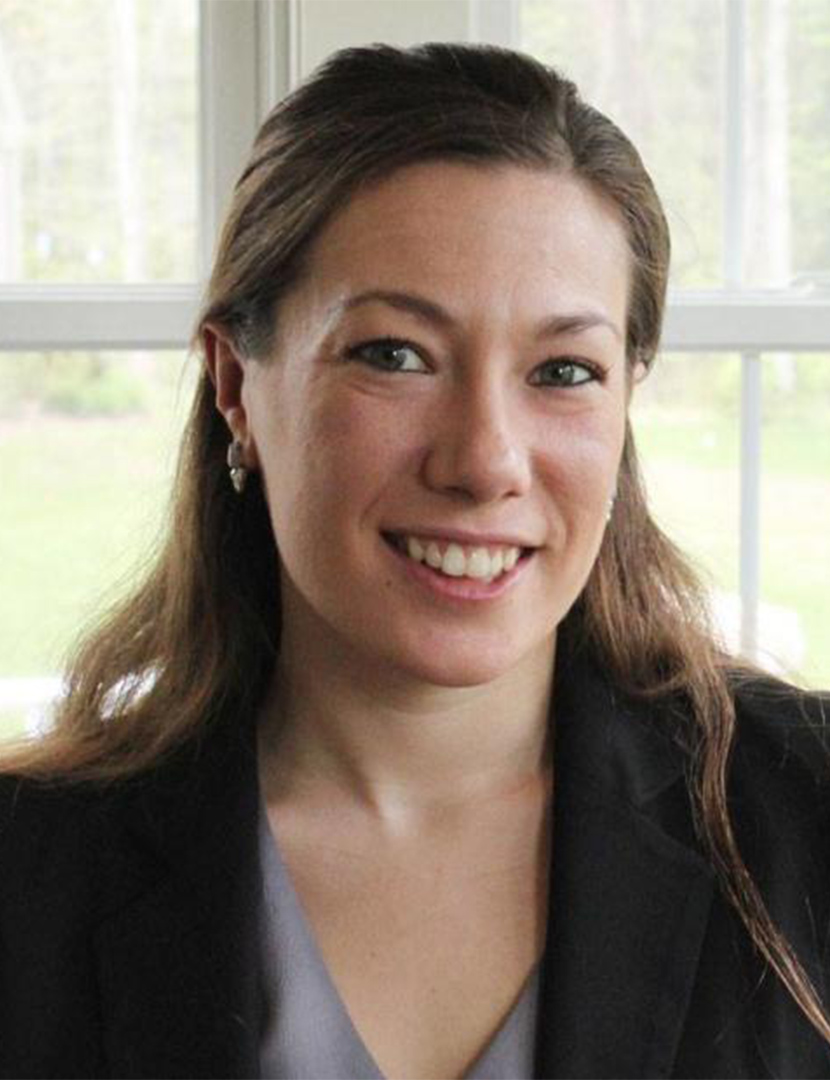
Christine Monska was appointed to the MCSW by the Caucus of Women Legislators in 2020. She is originally from Easthampton, but has lived and worked all across the Commonwealth. Christine is the Executive Director of the Women’s Fund SouthCoast in New Bedford where she increases opportunities for women, girls and gender expansive people to become economically independent, access education, and advocate for solutions to issues in their community. Her publications, speaking engagements, and workshops center on youth empowerment and policy advocacy, women in leadership across sectors and other global gender justice issues. Prior to joining the Women’s Fund SouthCoast, Christine designed and led the Young Women’s Initiative, a policy advocacy and leadership development program for young women in Springfield which was a local implementation of a national program stemming from the White House Council on Women and Girls.
Christine was also the District Director for former Senator Ben Downing where she also sat on the regional commission on the status of women and served as a Board Member for Berkshire County Action Council and Shout Out Loud, a small nonprofit addressing human trafficking. Most recently, Christine was Youth Leadership Programs Manager for The Clubhouse Network, a collaboration with the MIT Media Lab located in Roxbury, MA. In this role, she focused on leadership development and advocacy training in communities that lack representation. Before that, Christine was Continuing Education Advisor at Bard Microcollege, the nation’s first college for low-income women who experienced disrupted education and Program Officer for The Women’s Fund of Western MA. Christine holds a B.A. in Government from Smith College, a M.S. in Global Affairs with a concentration in International Law and Human Rights from New York University. In 2023 she was named a “Woman to Watch” by the SouthCoast Almanac.